08/06/26
Expert opinion
SCORM vs xAPI: Which Standard to Choose for Your Digital Training
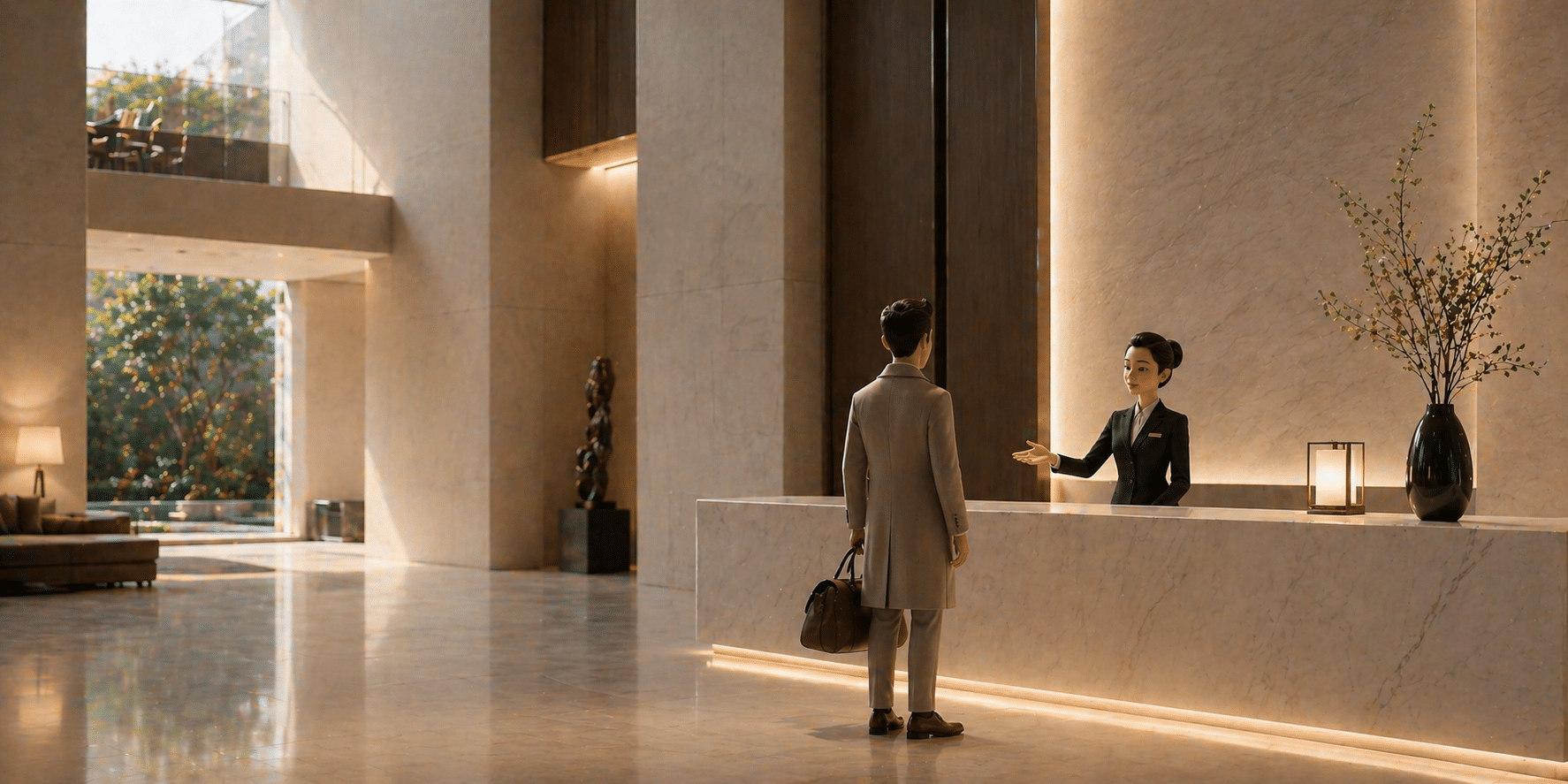
Most hotel groups train guest relations and loyalty as separate modules. Staff learn service standards in one track, and the loyalty program in another. Then they return to the floor and rarely connect the two, because the training never put them together.
The design fix is to embed both inside the same gamified operational experience where staff train on Standard Operating Procedures, so the guest conversation and the loyalty proposition are practised in the same context they are meant to happen in. This is the approach Emeraude Escape took with Accor when designing guest relations missions and the ALL Accor Live Limitless module inside the group’s 3D SOP Game.
Loyalty is a standalone business topic for most hotel groups: a tier structure, a set of benefits, a sign-up process. Guest relations is taught through separate service culture trainings. Each topic has its own module, its own quiz, its own certificate.
The trouble is that neither topic is standalone in real life. A returning guest recognises themselves at check-in because the receptionist engages with them as a returning guest, notices a preference already on file, and finds the moment inside the conversation where a loyalty benefit is genuinely useful. That sequence is one continuous interaction. Training that treats it as three separate lessons is teaching a version of the job that does not exist on the floor.
In the Accor SOP Game, the ALL Accor Live Limitless module does not sit on its own. It is woven into guest interaction missions that also cover front desk operations, complaint handling and service standards. A learner is mid-conversation with a guest, recognises the context, and is prompted to connect preferences to a loyalty benefit inside the same scene.
The design reason is simple. Loyalty content learned in parallel to the guest conversation stays abstract. Loyalty content learned inside the conversation becomes a line the learner could actually say.
The business reason is simpler. Accor measures ALL conversion directly, and it is one of the clearest commercial signals a loyalty training can move. When the training rehearses the moment the conversion happens, the training is pointed at the metric that funds it.

Guest relations scenarios have to be built with the same care as operational ones. A complaint-handling mission is only useful if the guest in the scene is recognisable: tired after a delayed flight, a family with a child who needs a specific space, a returning guest whose preference is already in the system, a VIP who expects a different register.
Each Accor brand brings its own service codes into those scenarios. A Pullman guest relations scene is not an Ibis guest relations scene with a different colour palette. The language, the posture, the pace of the exchange and the level of personalisation expected are different, because the brands promise different things. The scenario writing reflects that, so staff practise the behaviour the brand actually asks of them, not a generic version of “good service.”
This is where simulation-based training proves its weight. A module can describe how a complaint should be handled. A simulation puts the learner inside the moment, with the guest’s context on screen, and asks them to act.
A scenario built around a real guest moment can be assessed in two ways. Either the learner is graded on whether they chose the expected reply, or they are graded on whether the reply they chose fits the brand, the context and the guest in front of them.
The second is harder to design and more honest to the job. In the Accor SOP Game, scoring reflects how well the learner read the situation, not whether they hit a scripted line. The reward layer, and the secret room unlocked at the end of each chapter, sits on top of scoring that is doing pedagogical work: rewarding the learner for making the right call inside the brand’s service code, not for memorising a phrase.
One of Pascaline Hazart’s clearest principles as Global Head of Accor Academy is not to invent training-specific KPIs. Accor Academy tracks the indicators the business already tracks, so operations, commercial and L&D are speaking the same language.
For guest relations, that means RPS (reputation score) and GSS (guest satisfaction score), both followed up after training. For loyalty, it means the ALL conversion rate. These are the KPIs the operational and commercial teams already review every week. When the training is pointed at the same numbers, conversations about budget and renewal happen on shared ground.
A second layer of measurement sits closer to the learner: satisfaction and self-diagnosis after the training, sometimes co-assessed by the manager as a third party. The two layers work together. The first shows whether the training landed. The second shows whether behaviour shifted on the floor.
Accor’s 3D SOP Game included guest relations missions and the ALL Accor Live Limitless loyalty module inside the same simulation environment where staff trained on operational procedures.
The design placed loyalty content inside guest interaction scenarios, not in a separate track. Learners practised recognising the context, engaging with the guest, and connecting loyalty benefits to the specific guest situation. The reward system scored judgment quality inside the brand’s service code. Brand-specific environments ensured the scenarios reflected how each brand expects its staff to engage: Ibis interactions felt different from Pullman interactions because the service codes are different.
87% of learners gave the highest possible satisfaction score, with detailed questions averaging above 4.5 out of 5. The training links directly to the KPIs Accor’s commercial and operations teams already track, with weekly performance reporting allowing both teams to refine scenarios based on real data after launch.
Guest relations and loyalty training that cannot be read in commercial terms will always lose budget to the next priority. The strongest builds connect to the indicators the operational and commercial teams already follow, instead of inventing metrics that sit on the L&D side of the wall. When L&D and commercial leadership scope the project together, and the simulation rehearses the moments the KPIs are actually earned, the training becomes something both sides are invested in. Explore how Emeraude Escape designs training connected to business outcomes on our Learning & Development solutions page.
Get a personalized demonstration by one of our game design experts.



Mystery game
Congrats!
An error has occurred
Welcome {name}
Keep an eye on your email {email}, you will receive something from us in the next few hours.