10/12/25
Expert opinion
Gamification on the Rise in Morocco: Training, Education, and Organizations

In an age defined by information overload, attention has become the most valuable currency in learning. Countless platforms push content constantly, yet very little of it truly sticks. What people remember, what actually transforms behaviour, rarely comes from instructions alone. It comes from stories.
So how can we deliberately use storytelling to enhance learning? And how can we design learning experiences that make people not just consume information, but feel it?
Below, we explore five powerful storytelling principles, supported by neuroscience, used by master storytellers, and illustrated beautifully by the creatives at Emraude that elevate learning from informational to unforgettable.
Stories do more than entertain us. When we hear a story, especially one driven by emotion, the brain responds as though we are living the events ourselves. Sensory and emotional regions activate, even when the situation is fictional. This is why vivid stories can make our heart race, our palms sweat, or our eyes water.
Before diving into the five methods, it’s worth understanding why storytelling is so effective.
In learning, this means:
When learning feels like a story, it becomes a personal experience. And personal experiences stick.
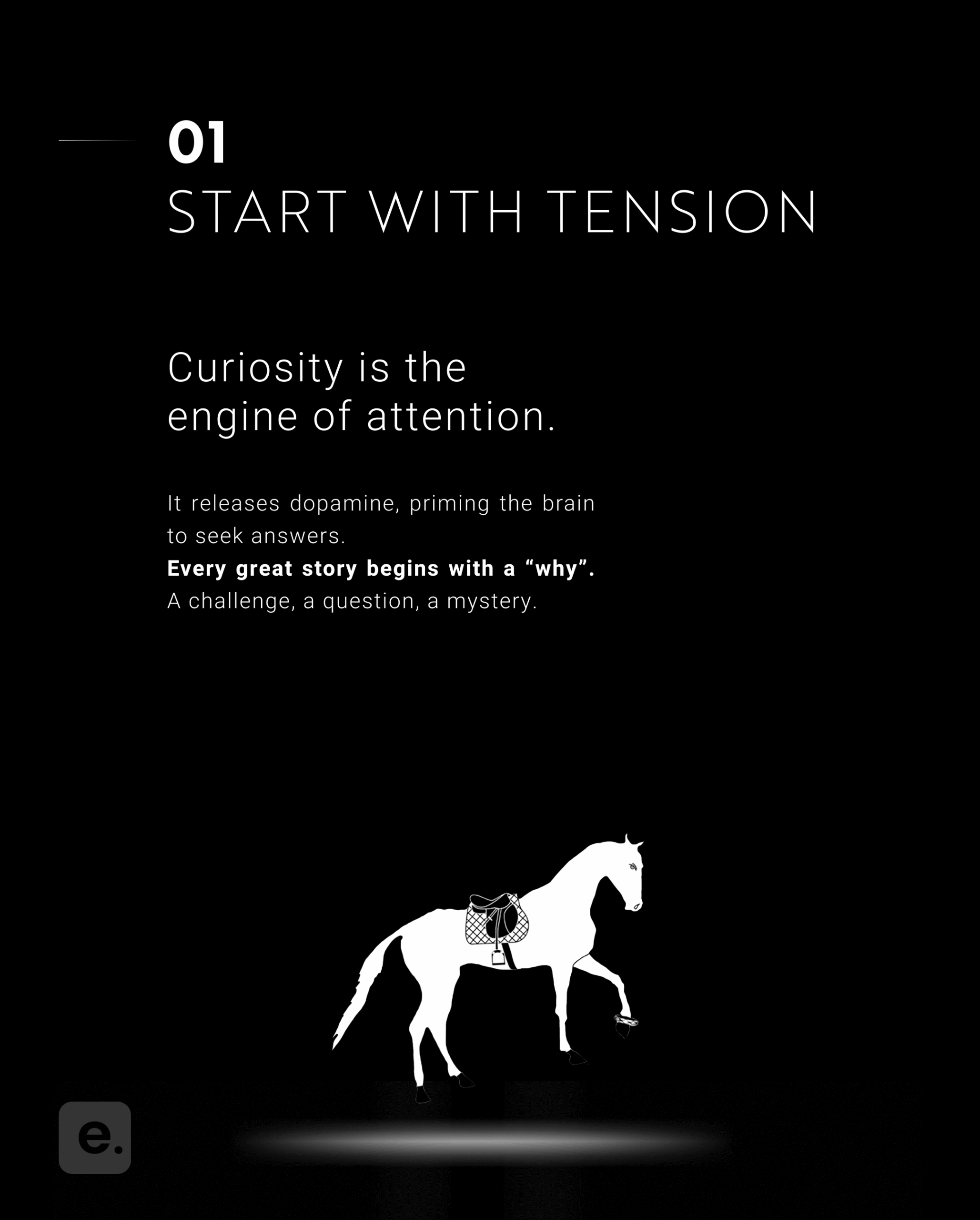
A great story starts with a question, a ‘why’ that pulls learners forward. Curiosity sparks dopamine, making learning engaging and sharpening focus.
In learning, tension can take many forms:
For example: “A customer storms into your store furious about a mistake and you’re the one who has to fix it. What do you do?”
Or: “Imagine you wake up in the year 2050. What does leadership look like now?”
Opening with tension invites exploration and momentum, not anxiety. When learning begins with a ‘why,’ learners stay to discover the ‘how.’”
—————————————
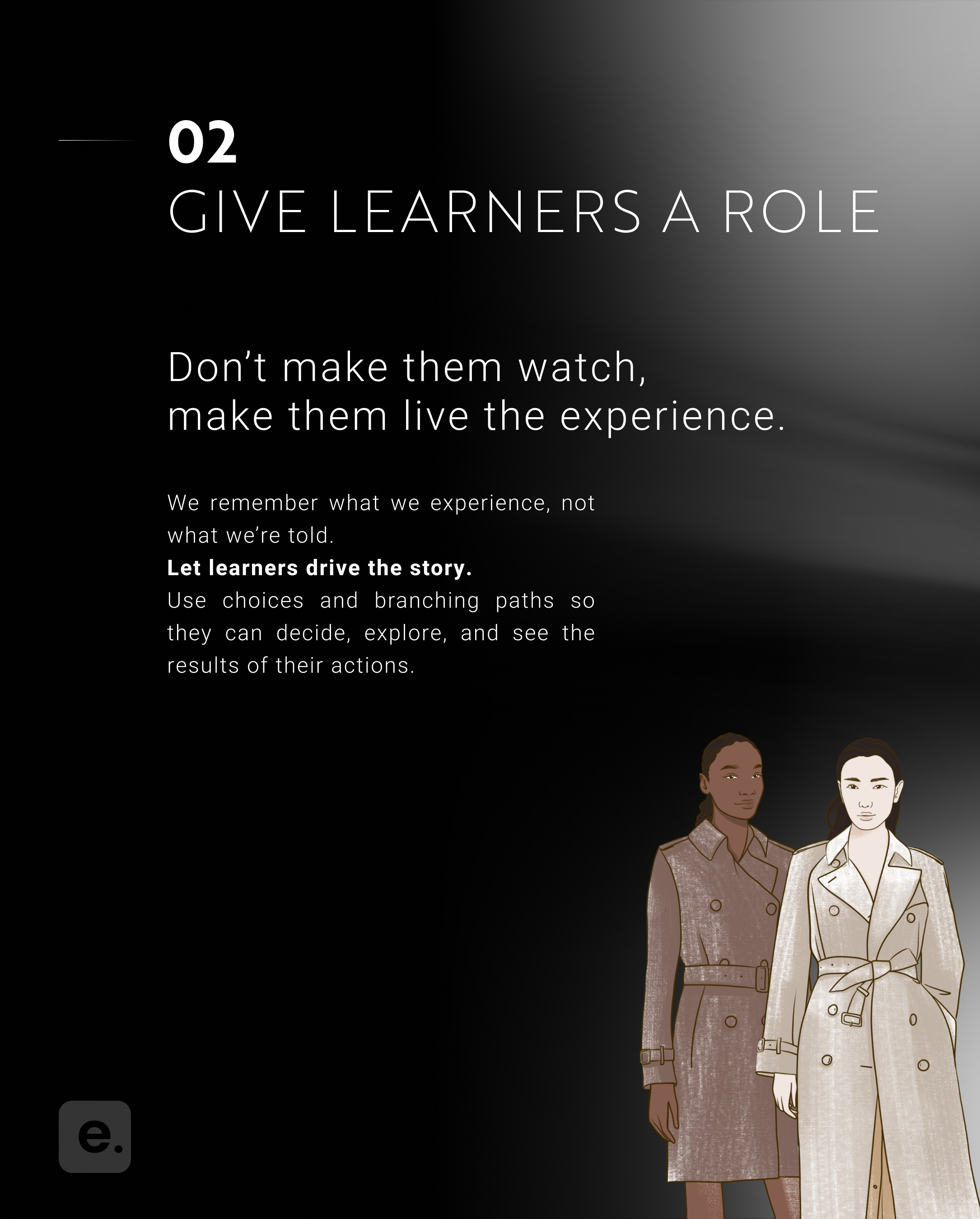
Passive learners retain less than those who actively participate. True experiential learning lets learners become part of the story. Simulations, branching scenarios, role-plays, and choose-your-own-path experiences deepen engagement by letting learners influence outcomes.”
Ways to give learners a role include:
In this model, learners are not empty vessels to fill. They are protagonists navigating challenges. In storytelling, the learning experience itself guides the learner. What is lived and experienced is remembered far more than what is simply told.
—————————————
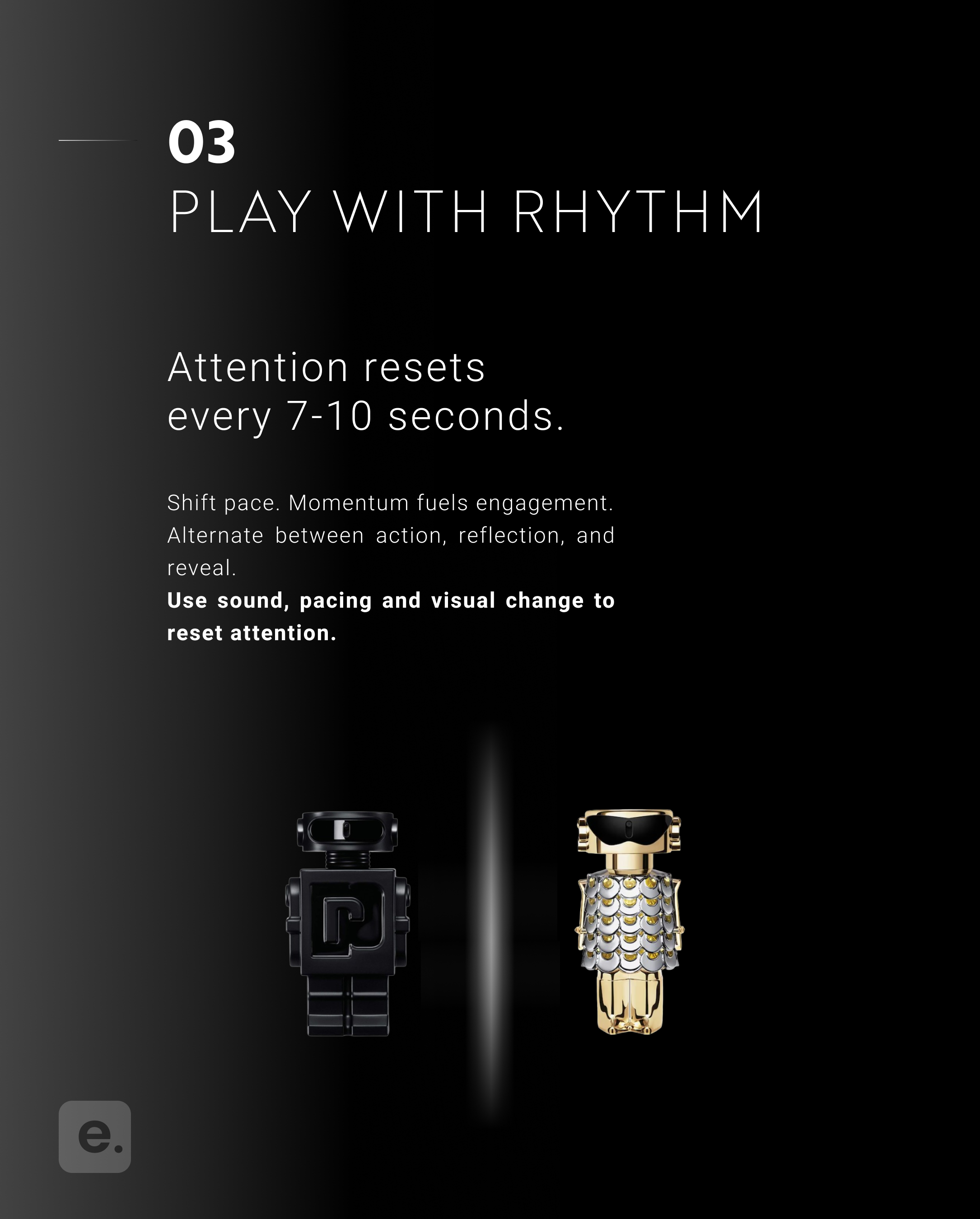
Rhythm, the pacing of a learning experience, is one of the most overlooked aspects of storytelling. A flat, monotonous experience puts the brain to sleep. A varied, dynamic one pulls the brain forward.
Here’s how to use rhythm in learning:
—————————————
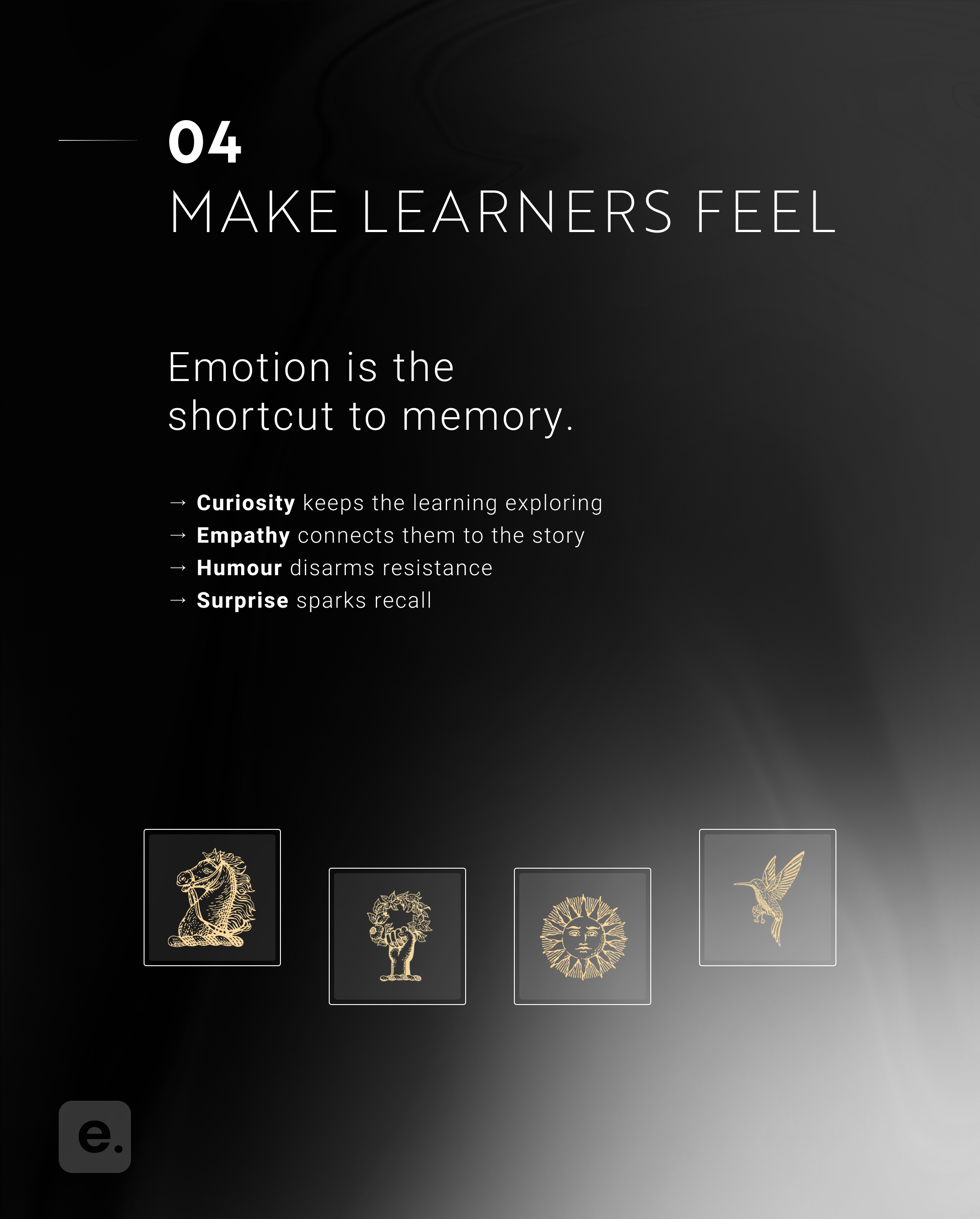
All memorable stories have one thing in common: they make us feel something.
Emotion is the glue of memory. We remember the teacher who inspired us, the moment that surprised us, the challenge that scared us, the character we empathized with. When learning triggers emotion, it becomes sticky.
There are four powerful emotional levers in learning: curiosity, empathy, humour and surprise. To integrate emotion into learning, consider:
Emotion should never feel manipulative, it should feel human.
—————————————
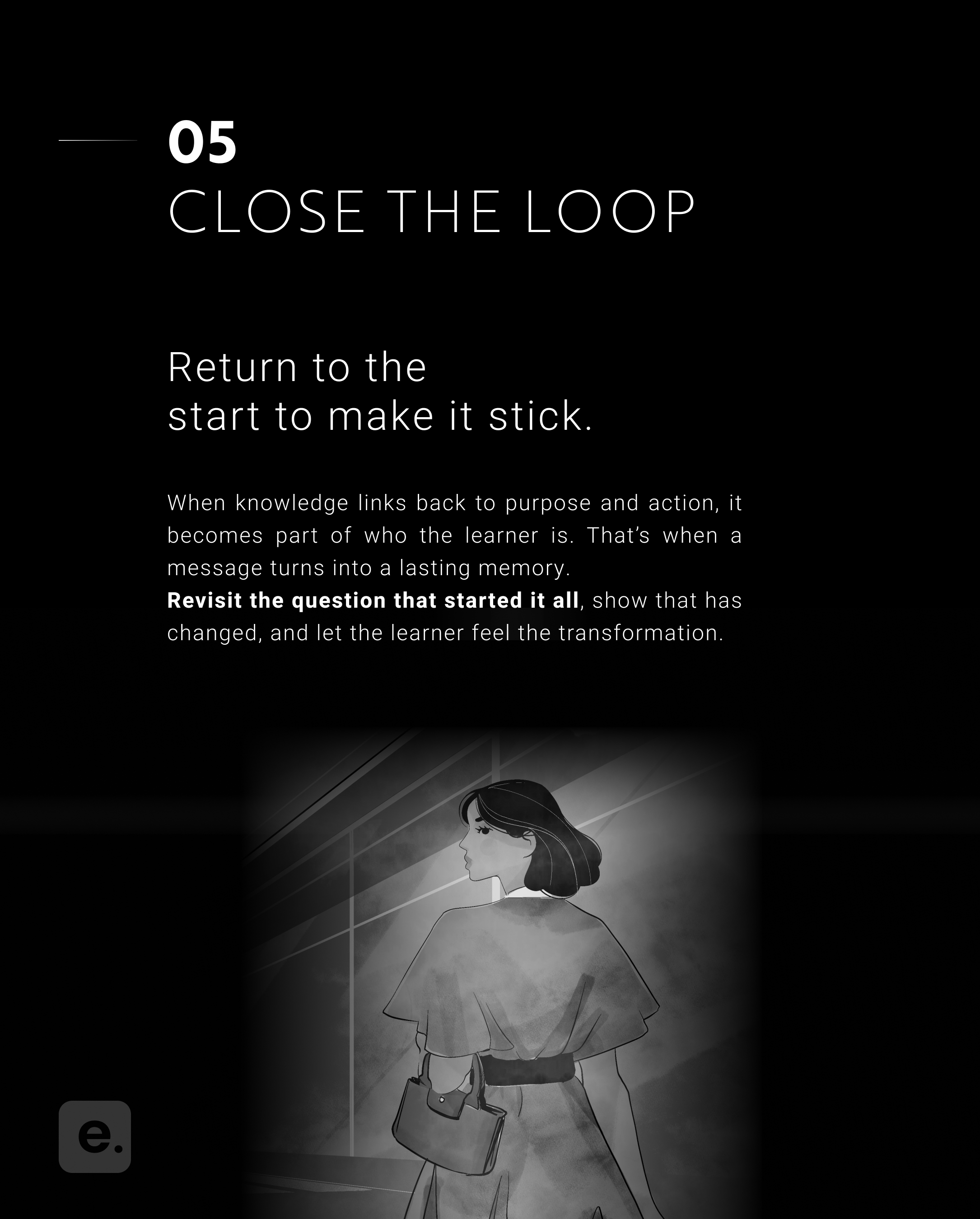
A great story doesn’t just begin well, it ends by reconnecting with its beginning.
Closing the loop reinforces memory because it links the learner’s journey to a clear purpose. It reminds them of where they started, what question they were trying to answer, and how their understanding has evolved.
To close the loop:
This technique reinforces neural connections. It turns story into meaning, and meaning into memory. When learners see the full arc from tension to resolution, they internalise the message not as content, but as part of themselves.
Storytelling is not an accessory to learning. It is the structure that makes learning meaningful.
When we use storytelling to design learning experiences:
In organizational learning, whether in compliance, onboarding, customer service, leadership, or product training, the goal isn’t simply to inform. It is to change behavior, build capability, and support transformation.
And transformation requires more than instruction. It requires a story.
When learning feels like a story, it becomes something worth remembering. Something learners can carry forward. Something powerful enough to shape decisions long after the training ends.
Here are the five principles once more:
Used together, these principles turn learning into an experience one that moves, engages, and stays with people.
In a world where information is everywhere but true engagement is rare, storytelling remains the most human, timeless, and powerful tool we have. It brings meaning to knowledge and purpose to learning. It helps us connect not only with the content, but with ourselves.
Learning that feels like a story becomes learning that lasts.
Get a personalized demonstration by one of our game design experts.



Mystery game
Congrats!
An error has occurred
Welcome {name}
Keep an eye on your email {email}, you will receive something from us in the next few hours.